


Seasonal thoughts from Planting Gems
Adapting our planting designs to the changing climate
With London’s climate expected to mirror Barcelona’s by 2050, today’s horticultural specialists have a duty to prepare their clients’ gardens for the future.
This includes shifting towards climate-resilient, bio diverse, and water-conscious landscapes to combat rising temperatures and urban heat.
An easy mistake would be to simply choose Mediterranean plants, but these won’t always thrive on our heavy London clay and dislike our increasingly wet winters.
Turning to professional help is therefore key to the long term success of our outdoor spaces. Planting designs of the future should all include:
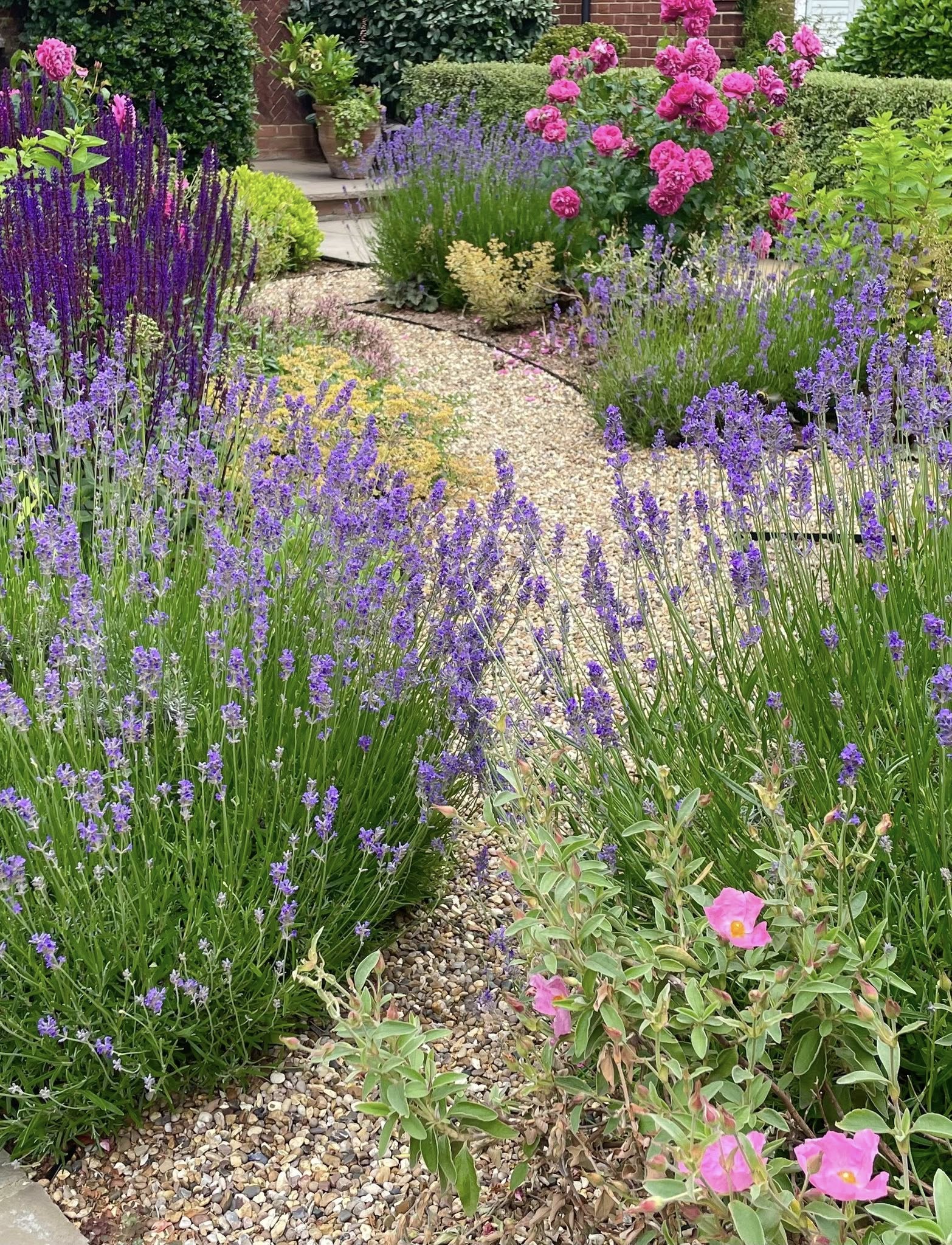
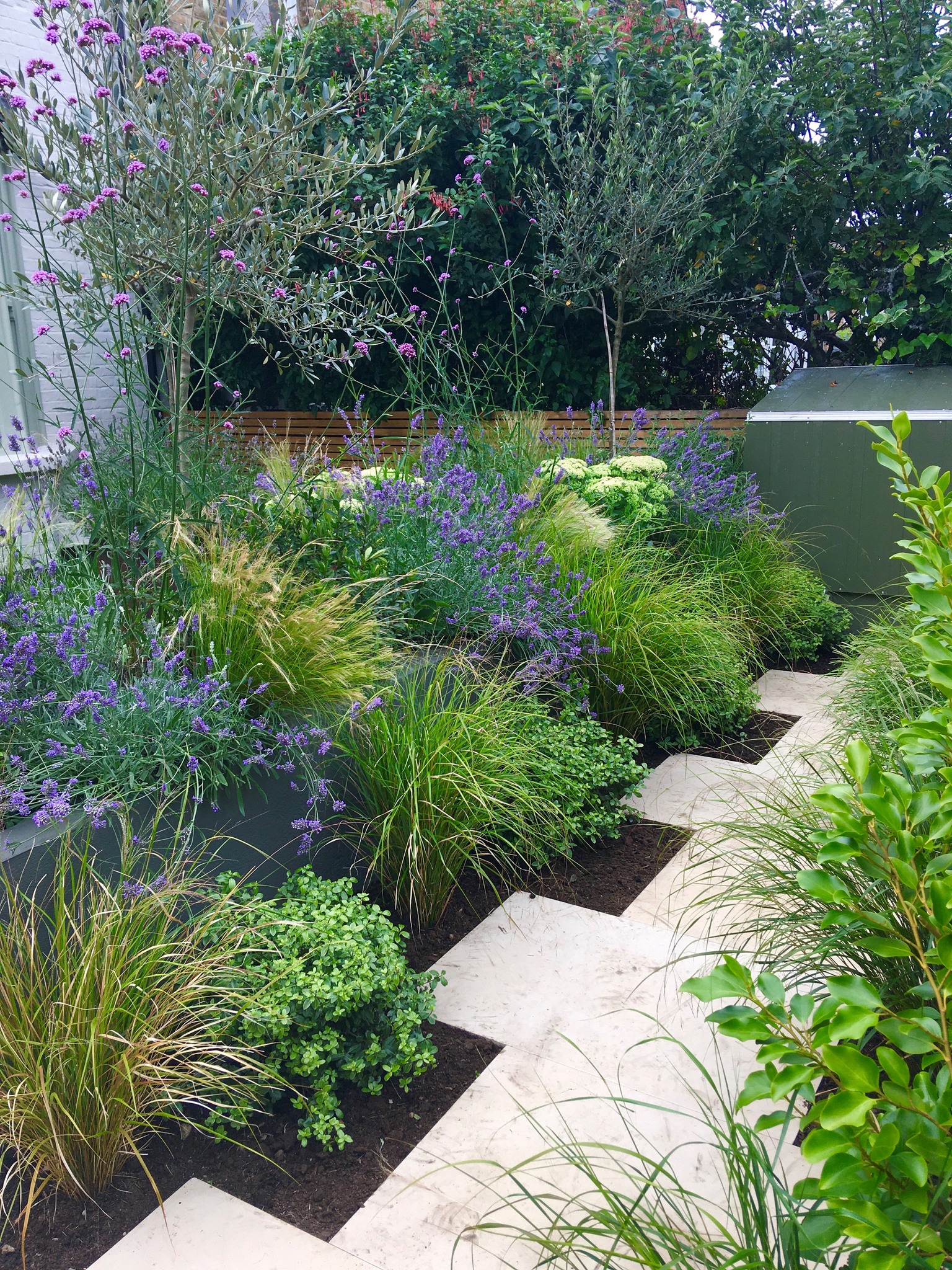
- Climate-Adaptive Species: choosing a palette of plants that cope with heat and occasional drought, and making sure they are planted in the right position, and in the right conditions, including plenty of drainage and a mulch that retains water. Common selections include Cistus, Hebe, Nepeta, Salvia, hardy Geraniums, Sedum, Grasses and Verbena for sunny positions, and Ferns, Epimedium and Alchemilla for shade.
- Biodiversity and Wildlife Support: creating wildlife habitats through the use of native species and hedging such as hawthorn and holly, and structural planting that provides both food and shelter. The practice of not clearing up borders until the end of winter should also be encouraged so that birds and insects can hide and feed on seed heads.
- Water Management: using water butts to collect rain water but also making sure that hard landscaping areas include permeable and porous surfaces. This is particularly important in front gardens, which are too often paved for parking space, with nowhere for the water to run. Mulching with a thick layer of organic matter is also a good way to reduce water evaporation, and therefore reduce the need for artificial watering.
- “Wilder” Aesthetic:Manicured, high-maintenance lawns need to be replaced by more natural, longer grass areas and sustainable plant structures that change with the seasons. Borders should also be more densely planted, using layers to create shade and regulate the ground temperature.
- Resilient Tree Choices: focusing on species with higher tolerance for both drought and waterlogging, and more importantly, providing shade and lowering the overall temperature in the garden.



0 Comments